
An internal wall that carries load. The build-up is a mass–spring–mass arrangement with two decoupled Omega channels, which is the arrangement used where airborne sound transmission between dwellings matters. The intended applications below follow from that geometry — they are not a performance claim, and no acoustic figure is stated for this detail until a laboratory test report exists.
D.03
Muro portante interior
Internal load-bearing wall
196 mm
Espesor total · Revisión 01 · 2026-08
D.03
Muro portante interior
SCALE 1:10
Las capas discontinuas van dentro de la cámara entre montantes, no se suman a ella. Navegable con las flechas del teclado; los mismos datos se publican como tabla en la tabla de capas de abajo.
Fotografías
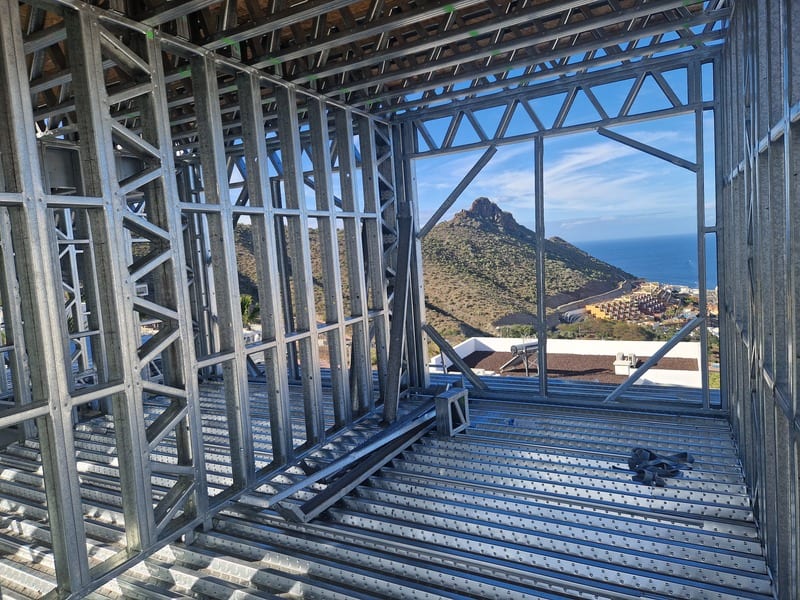
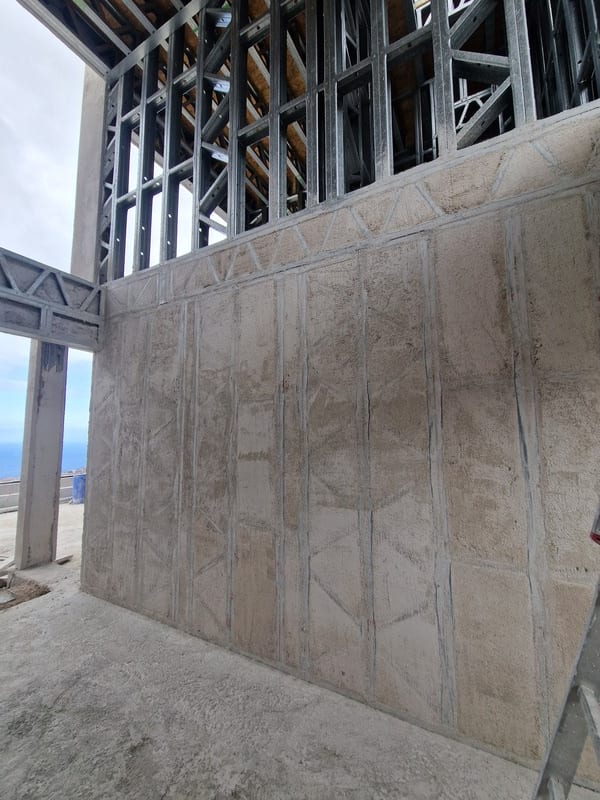
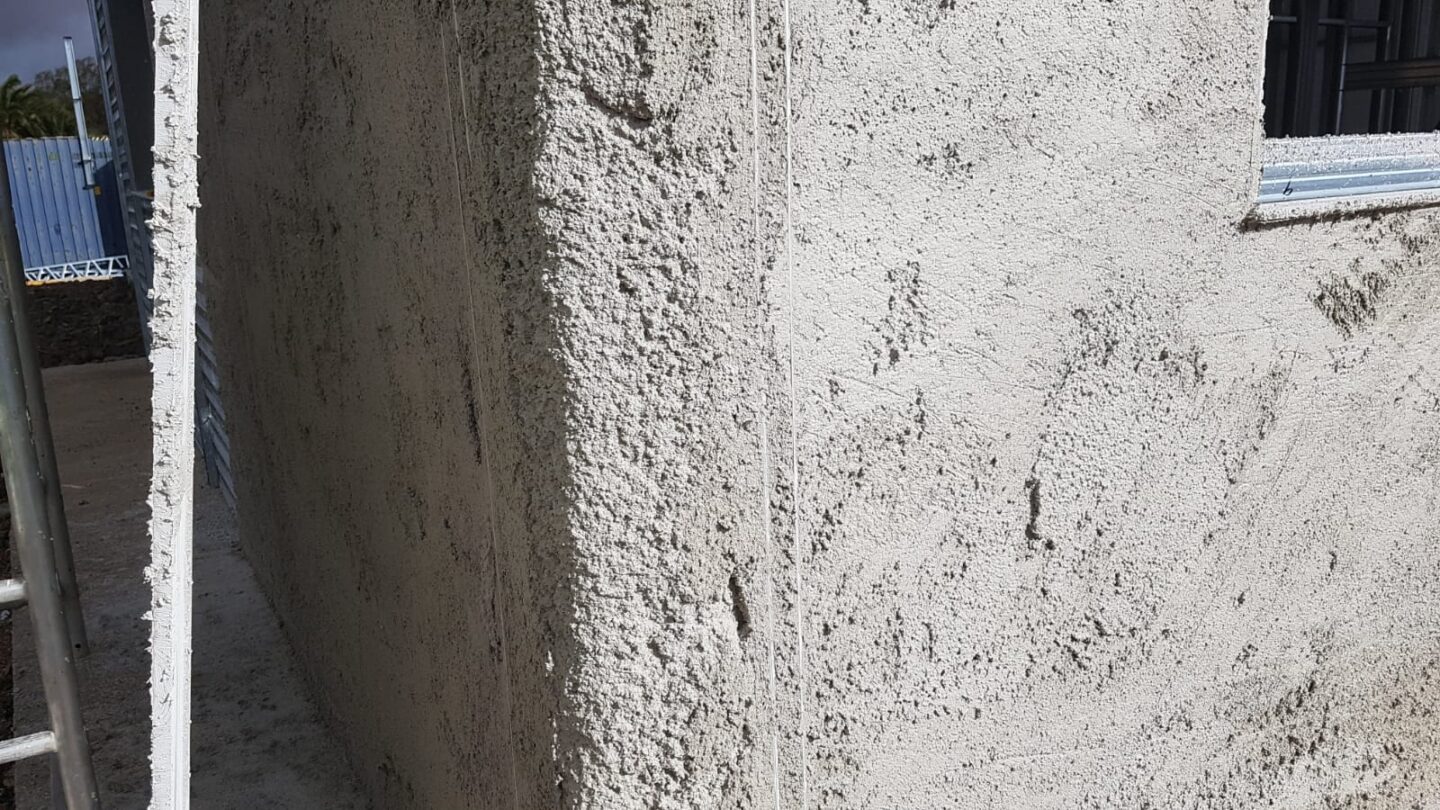
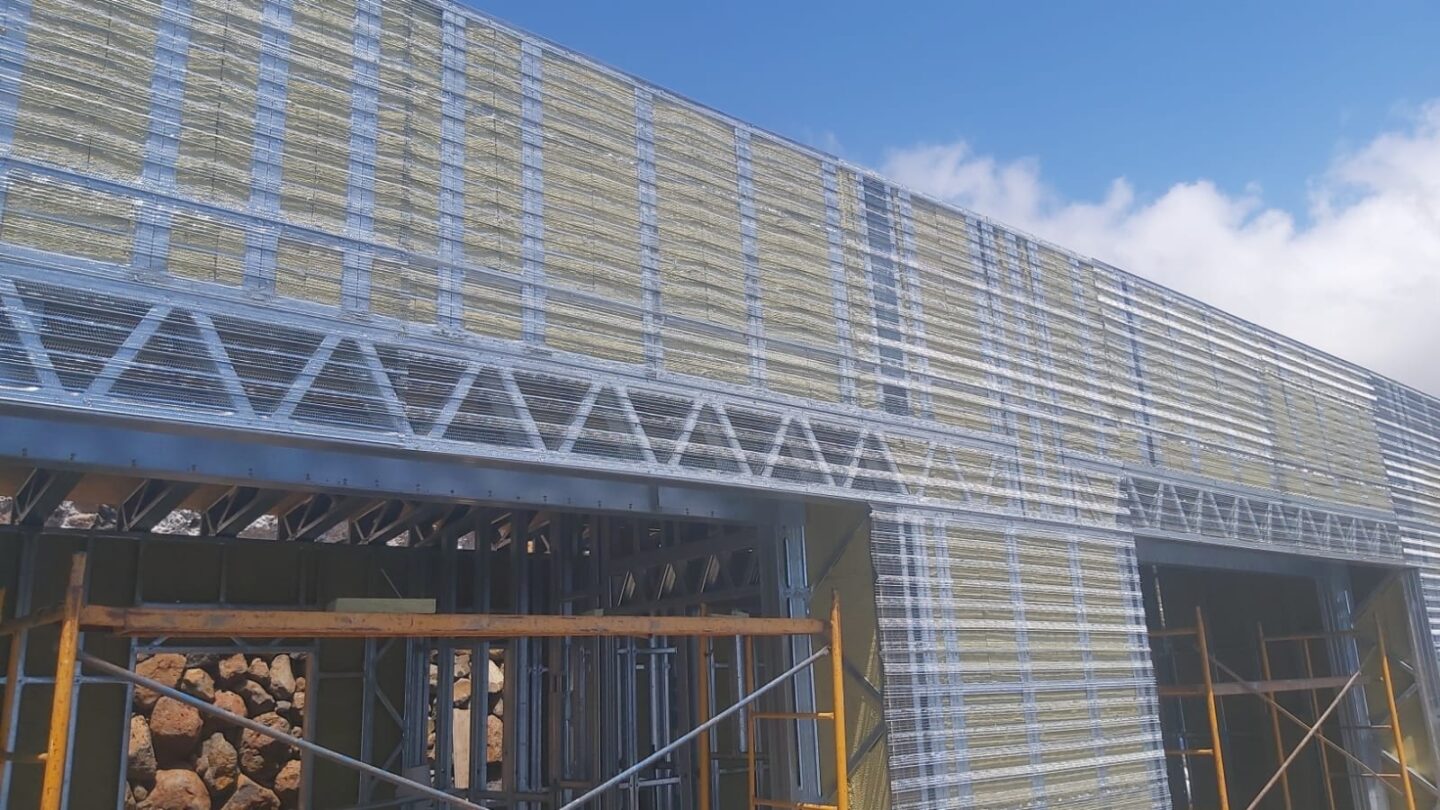
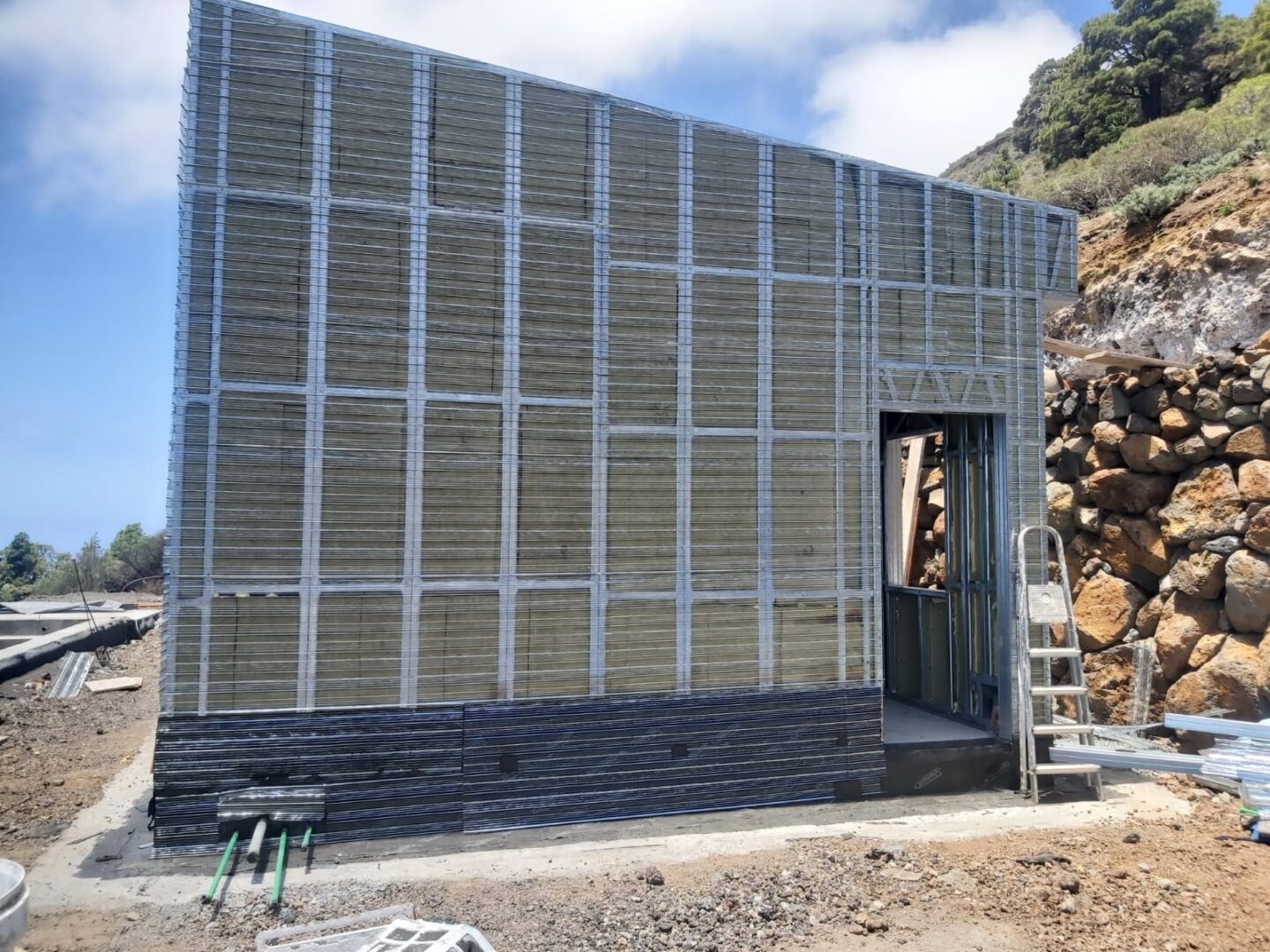
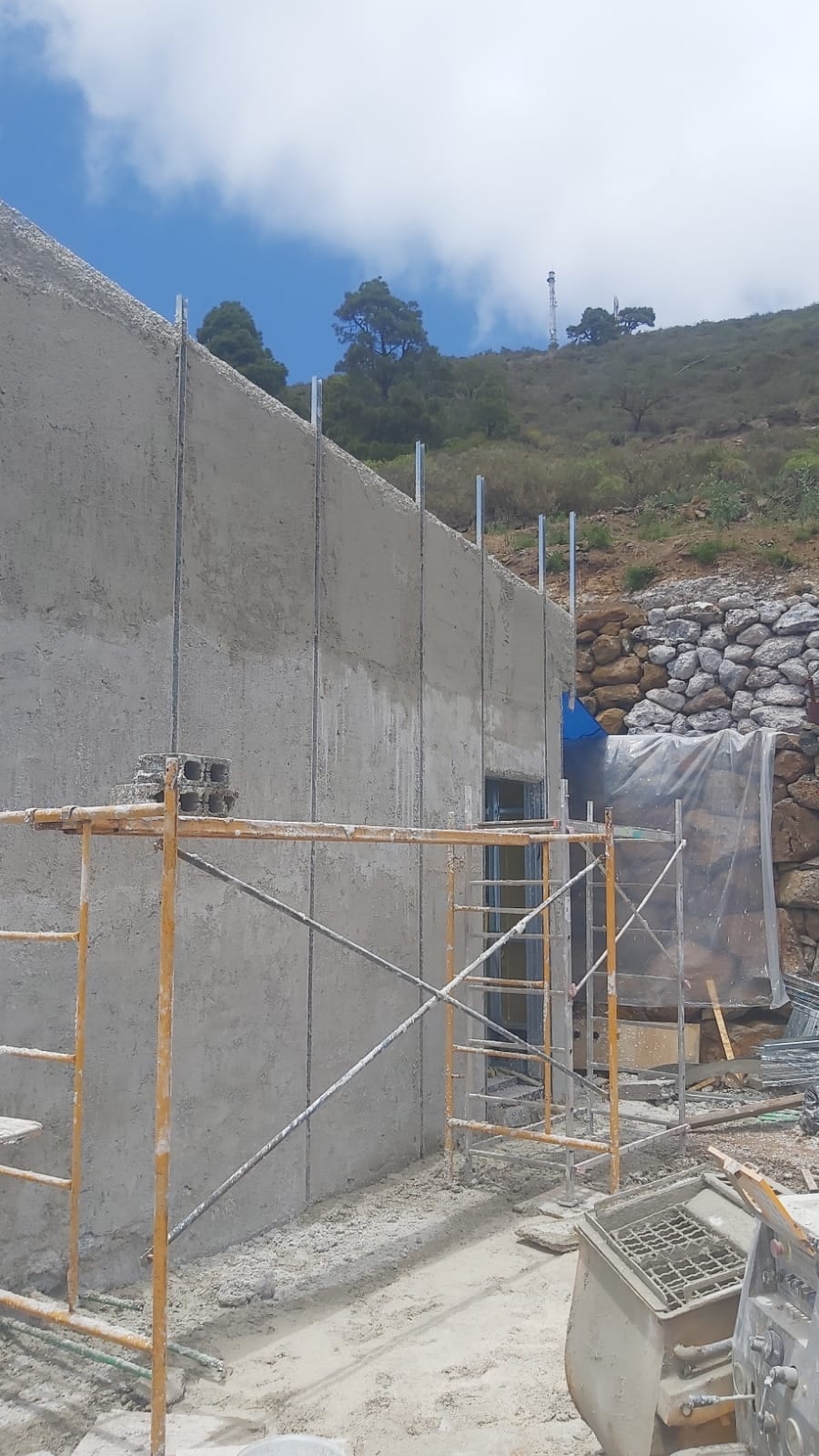
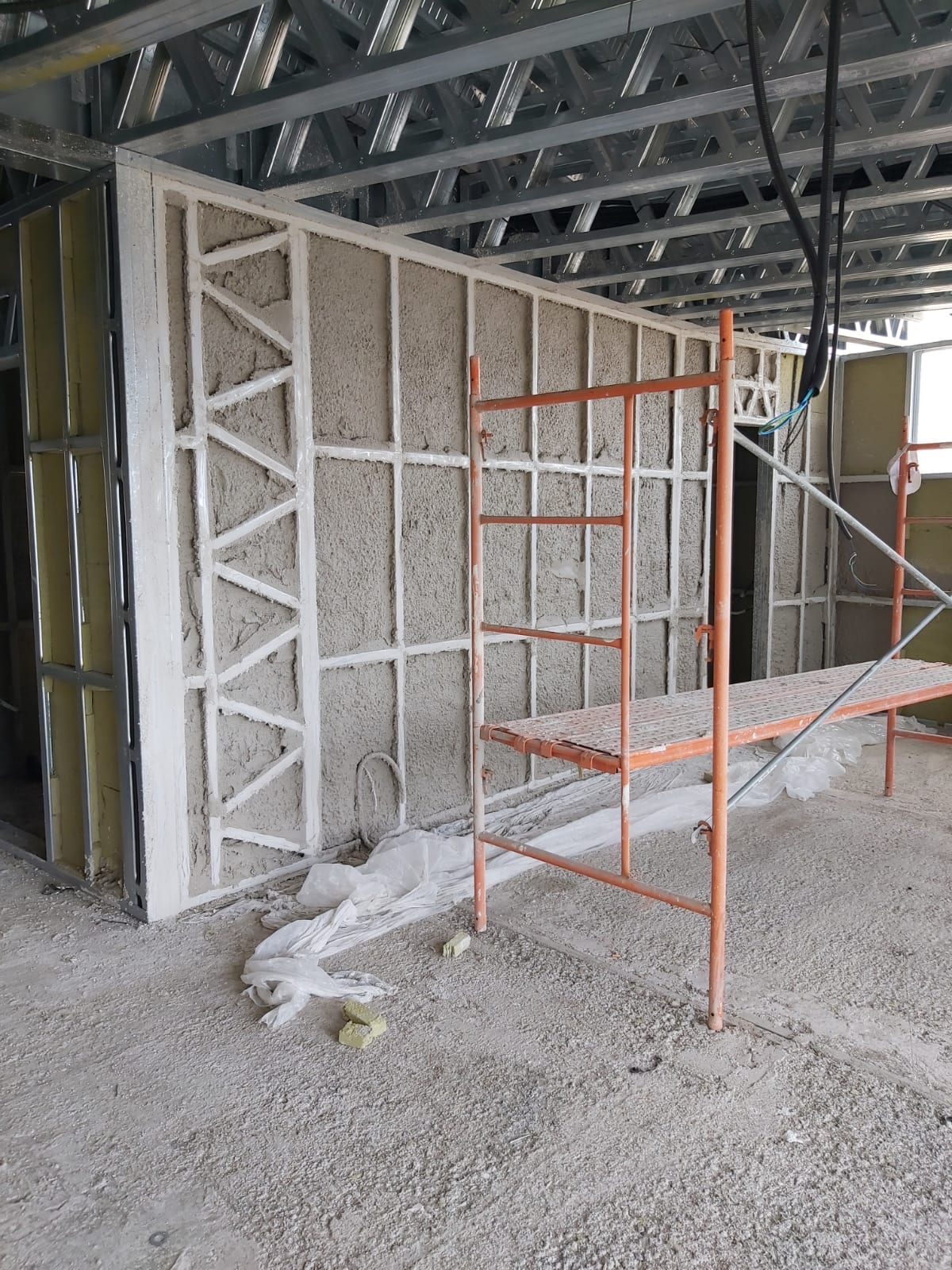
1 / 7
Tabla de capas
| Capa | Material | Espesor | λ | Función |
|---|---|---|---|---|
| 1 Pladur | Gypsum board | 13 mm | — | Internal finish |
| 2 Perfil Ω | Cold-formed galvanised steel | 15 mm | — | Decoupled fixing profile for the lining, with a service void |
| 3 INSULTERM 600 en la cámara | Sprayed thermal-acoustic conglomerate | 45 mm | 0.138 W/m·K | Encapsulation and mass |
| 4 Lana de roca en la cámara | Rock wool | 50 mm | 0.039 W/m·K | Acoustic core ISOVER Alphatoit rigid rock wool panel, as in D.02. λD from the manufacturer's datasheet (FT_Alphatoit_ES, 14/03/2024), to EN 12667 / EN 12939. |
| 5 INSULTERM 600 en la cámara | Sprayed thermal-acoustic conglomerate | 45 mm | 0.138 W/m·K | Encapsulation and mass |
| 6 Perfil de acero C 140 | Cold-formed galvanised steel | 140 mm | — | Load-bearing structure — the cavity contains layers 3, 4 and 5 |
| 7 Perfil Ω | Cold-formed galvanised steel | 15 mm | — | Decoupled fixing profile for the lining, with a service void |
| 8 Pladur | Gypsum board | 13 mm | — | Internal finish |
| Total | 196 mm |
Una raya indica que el documento de origen no declara ese valor; no es un cero. Las capas contenidas en la cámara van sangradas: van dentro del canto del montante, por lo que la columna no suma el total.
Prestaciones calculadas
| Propiedad | Valor | Base |
|---|---|---|
| Transmitancia U, corregida por puentes | 0.45 W/m²K | EN ISO 6946, one-dimensional steady state, with a +20% bridging correction applied as an engineering estimate. |
| Peso propio | 91 kg/m² | Mass estimate from the layers and dimensions in the source document. |
| Equivalente tradicional | 239 kg/m² | Derived from the published self-weight and reduction percentage. |
| Reducción de peso | −62% | Self-weight against the traditional equivalent build-up. |
| Resistencia al fuego (EI) | Programa de ensayos en curso — contacte con el departamento técnico | A la espera del informe de ensayo de laboratorio |
| Aislamiento a ruido aéreo (R_A) | Programa de ensayos en curso — contacte con el departamento técnicoAcoustic test programme in progress | A la espera del informe de ensayo de laboratorio |
| Ruido de impacto (L_nw) | Programa de ensayos en curso — contacte con el departamento técnico | A la espera del informe de ensayo de laboratorio |
| Capacidad de arriostramiento | Programa de ensayos en curso — contacte con el departamento técnico | A la espera del informe de ensayo de laboratorio |
Las transmitancias son cálculos unidimensionales en régimen estacionario según EN ISO 6946. La corrección por puentes térmicos se aplica como estimación de ingeniería: +20% en muros y +15% en elementos horizontales. El análisis numérico 2D según EN ISO 10211 está en curso; los valores se actualizarán al completarlo.
Aún no declarado
- EIResistencia al fuego · en ensayo
- R_AAislamiento a ruido aéreo · en ensayo
- L_nwRuido de impacto · en ensayo
- rackingCapacidad de arriostramiento · en ensayo
Programa de ensayos en curso — contacte con el departamento técnico
Peso frente al tradicional
| Elemento | Solid System | Tradicional | Reducción |
|---|---|---|---|
| D.03 Muro portante interior | 91 kg/m² | 239 kg/m² | −62% |
Dónde se usa
- Party walls between dwellings — intended use, pending acoustic test
- Corridor walls — intended use, pending acoustic test
- Compartment walls — intended use, pending acoustic and fire test
Notas de diseño
- The two Omega channels are decoupled by design. Rigidly bridging them with a fixing or a service run defeats the mass–spring–mass arrangement.
- Intended applications are stated from the geometry of the build-up. They are not substantiated until the acoustic test programme reports.